
Investment Details
Order This Print
Print Medium
• Professional archival quality prints
• Made to order — please allow 2–4 weeks for delivery (3–4 weeks for acrylic)
• Certificate of authenticity included
• Secure packaging and shipping
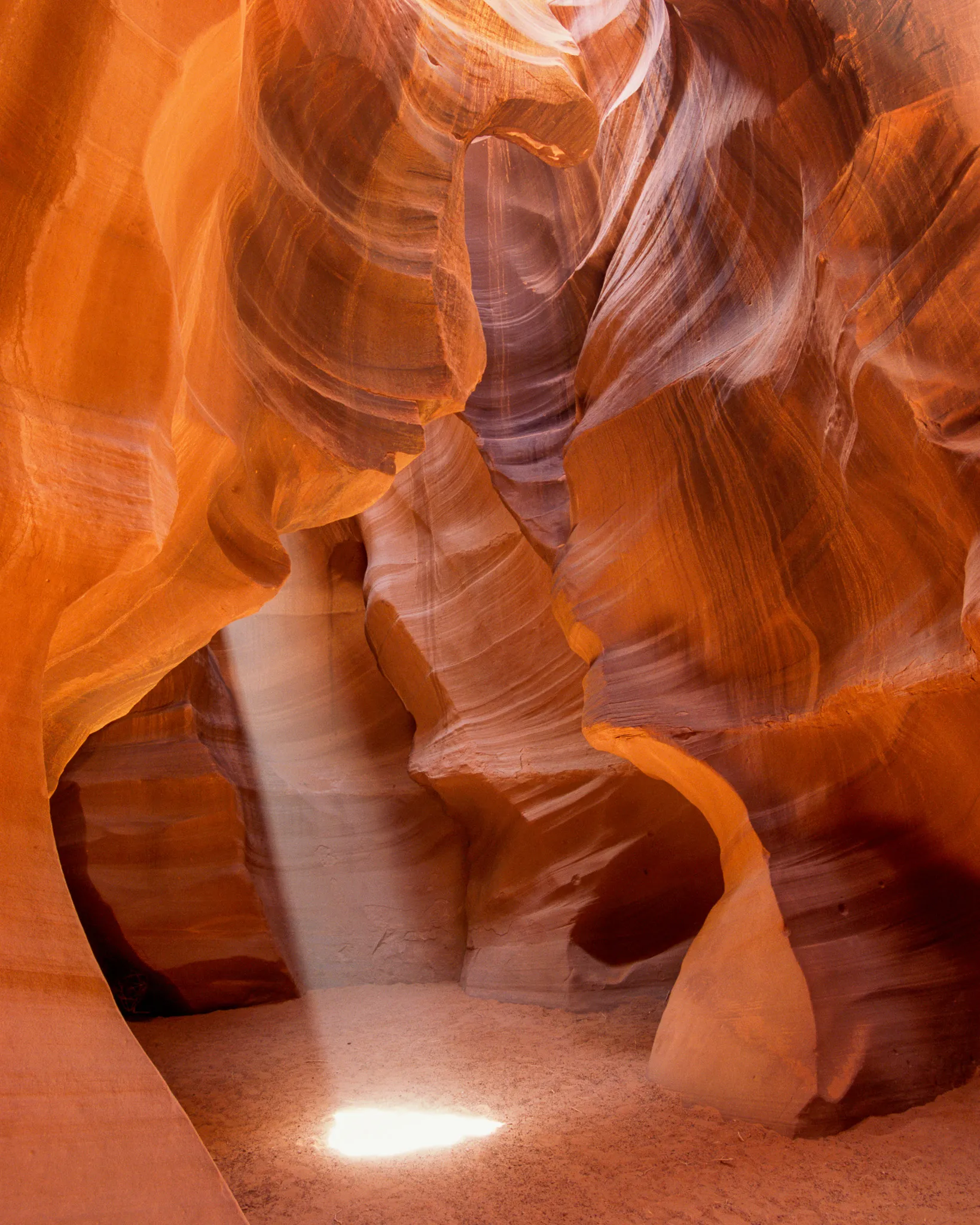
Antelope Canyon near Page, Arizona funnels desert light through narrow slots of sandstone into something that doesn't look real. The right angle happens at midday in spring. Shot on Fuji Velvia 50 with a 35mm camera rather than the 4x5, because the canyon walls are too close together for a view camera and the exposures were long enough that any movement would have ruined it. The beam catches suspended dust and turns it visible. It lasts about an hour around solar noon. Then it's gone. Available as a limited edition fine art print on Fujicolor Crystal Archive Glossy paper, ChromaLuxe aluminum, or Lumachrome HD TruLife Acrylic in sizes from 11x14 to 40x50.
Antelope Canyon earns its reputation. The Navajo sandstone walls have been carved by flash floods over thousands of years into shapes that don't look like rock at all. Smooth, flowing, layered in deep oranges and reds with shadows that shift toward purple in the narrow sections. Every surface curves. Nothing is straight.
The light beams happen in the upper canyon around midday in summer, when the sun is high enough to angle directly through the narrow slot at the top. Dust particles in the air make the beam visible, and the beam itself moves across the floor as the sun tracks overhead. Each one lasts maybe twenty minutes before the angle shifts and it's gone.
This one is fully formed. A tight column of light dropping from the invisible opening above, widening slightly as it falls, landing as a bright ellipse on the sand. Everything around it is lit only by the orange glow bouncing off the walls, which gives the canyon its characteristic warmth even in the shadowed sections.
The Navajo call this place Tsé bighánílíní, meaning the place where water runs through rocks. Water shaped every surface here, then left. The light found its way in through the same opening.
Single Beam of Light
Arizona
Browse Arizona gallery →Print Medium
• Professional archival quality prints
• Made to order — please allow 2–4 weeks for delivery (3–4 weeks for acrylic)
• Certificate of authenticity included
• Secure packaging and shipping
Need a custom size or have questions?
Contact for Custom OrdersAntelope Canyon near Page, Arizona funnels desert light through narrow slots of sandstone into something that doesn't look real. The right angle happens at midday in spring. Shot on Fuji Velvia 50 with a 35mm camera rather than the 4x5, because the canyon walls are too close together for a view camera and the exposures were long enough that any movement would have ruined it. The beam catches suspended dust and turns it visible. It lasts about an hour around solar noon. Then it's gone. Available as a limited edition fine art print on Fujicolor Crystal Archive Glossy paper, ChromaLuxe aluminum, or Lumachrome HD TruLife Acrylic in sizes from 11x14 to 40x50.
Visualize In Your Space
See how this print looks in different settings and sizes
Modern Living Room
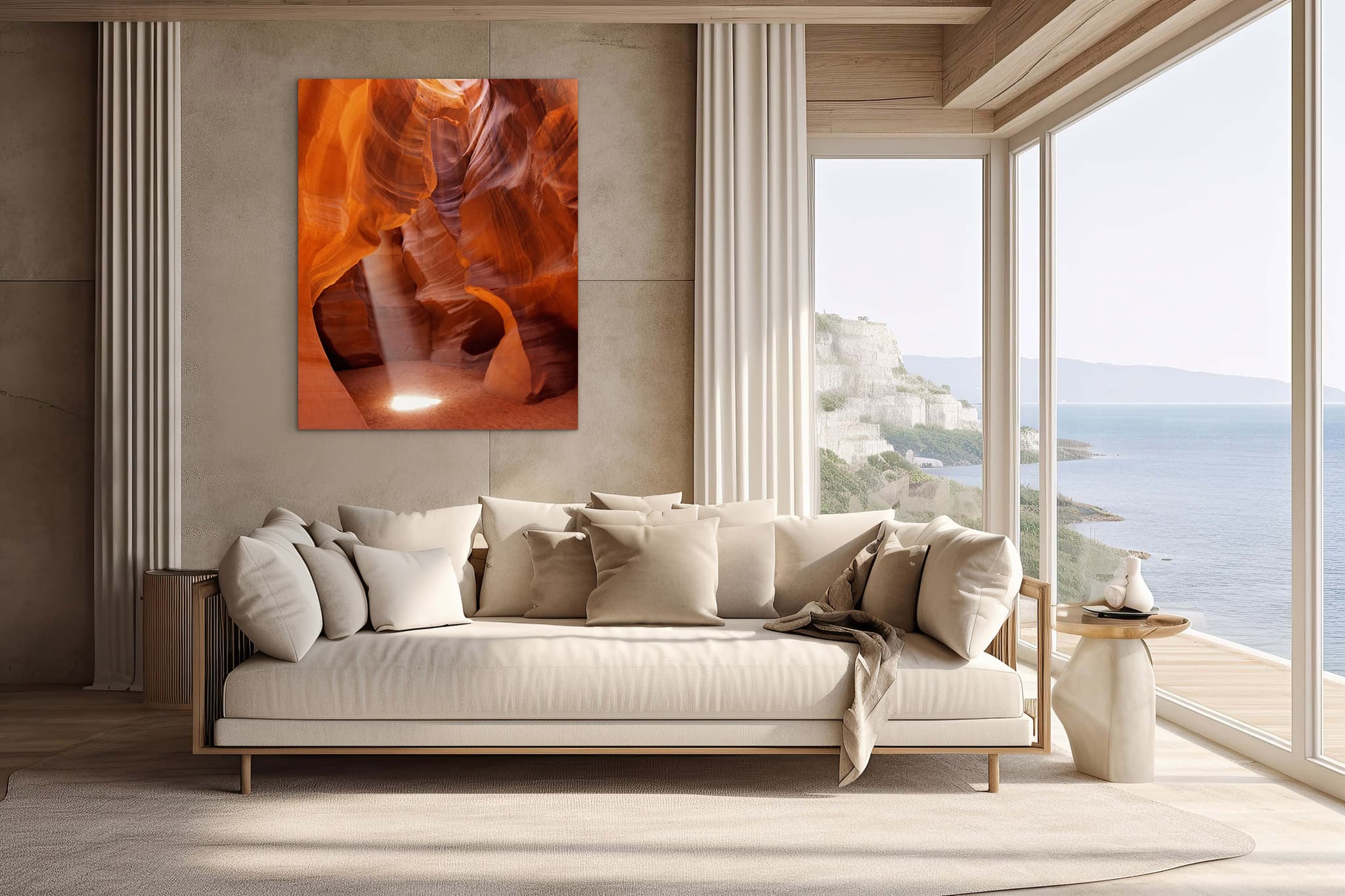
Lumachrome acrylic print displayed in an elegant coastal living room
Want to see this print in your specific space with accurate lighting and dimensions?
Request Custom Room VisualizationAntelope Canyon earns its reputation. The Navajo sandstone walls have been carved by flash floods over thousands of years into shapes that don't look like rock at all. Smooth, flowing, layered in deep oranges and reds with shadows that shift toward purple in the narrow sections. Every surface curves. Nothing is straight.
The light beams happen in the upper canyon around midday in summer, when the sun is high enough to angle directly through the narrow slot at the top. Dust particles in the air make the beam visible, and the beam itself moves across the floor as the sun tracks overhead. Each one lasts maybe twenty minutes before the angle shifts and it's gone.
This one is fully formed. A tight column of light dropping from the invisible opening above, widening slightly as it falls, landing as a bright ellipse on the sand. Everything around it is lit only by the orange glow bouncing off the walls, which gives the canyon its characteristic warmth even in the shadowed sections.
The Navajo call this place Tsé bighánílíní, meaning the place where water runs through rocks. Water shaped every surface here, then left. The light found its way in through the same opening.
Investment Details
Investment-Grade Quality
- • Museum-quality archival materials (100+ year permanence)
- • Certificate of authenticity included
- • White-glove delivery available
Collector Consultation
Corporate projects, custom dimensions, or investment inquiries.
Contact for consultation →You Might Also Like
Explore more prints from the same region and style.
Arch Slot
Arizona
Canyon Bust
Arizona
Canyon's Gentle Glow
Utah
Cliff Bloom
Utah
Crooked Cottonwood
Utah
Golden Cottonwood Reflections
Utah
Golden Glow
Utah
Heart of Maples
Utah
About “Single Beam of Light”
The Image
"Single Beam of Light" presents a distinctive perspective on the dramatic landscapes of Arizona. Antelope Canyon earns its reputation. The Navajo sandstone walls have been carved by flash floods over thousands of years into shapes that don't look like rock at all. Smooth, flowing, layered in deep oranges and reds with shadows that shift toward purple in the narrow sections. Every surface curves. Nothing is straight.
The light beams happen in the upper canyon around midday in summer, when the sun is high enough to angle directly through the narrow slot at the top. Dust particles in the air make the beam visible, and the beam itself moves across the floor as the sun tracks overhead. Each one lasts maybe twenty minutes before the angle shifts and it's gone.
This one is fully formed. A tight column of light dropping from the invisible opening above, widening slightly as it falls, landing as a bright ellipse on the sand. Everything around it is lit only by the orange glow bouncing off the walls, which gives the canyon its characteristic warmth even in the shadowed sections.
The Navajo call this place Tsé bighánílíní, meaning the place where water runs through rocks. Water shaped every surface here, then left. The light found its way in through the same opening.
Technical Approach
This photograph was captured using a 35mm camera loaded with Fujichrome Velvia 50. Shot during midday, the quality of light at this hour defined the mood and tonal range of the final image. Spring brought fresh growth and soft light to the landscape, conditions that reward patient composition. Velvia's legendary color saturation intensifies warm tones and rich greens, creating vivid interpretations of natural scenes.
Location & Subject
The Sonoran Desert and Colorado Plateau create one of Earth's most photographically diverse regions. Ancient geological forces carved slot canyons, towering buttes, and vast desert expanses that shift color throughout the day. From the iconic silhouettes of Monument Valley to the intricate sandstone formations of Vermilion Cliffs, Arizona offers landscape photographers endless opportunities to capture the raw beauty of the American Southwest. Desert landscapes reward photographers who understand the extremes of this environment. The absence of atmospheric moisture creates exceptional clarity and vibrant color saturation, particularly during golden hour. Heat creates convection currents requiring careful timing, while dramatic temperature swings between day and night generate unique weather patterns. Desert subjects—from weathered joshua trees to abstract dune formations—benefit from the clean, directional light these environments provide.
Collector Information
"Single Beam of Light" is offered as a limited edition fine art print, individually produced using museum-quality archival materials. each print includes a signed certificate of authenticity documenting its place in the edition. Available print options include traditional photographic paper for matting and framing, ChromaLuxe metal for contemporary presentation, and Lumachrome TruLife acrylic for maximum visual impact and longevity.
Need a Custom Size or Have Questions?
Corporate projects, custom dimensions, or investment inquiries — happy to discuss your specific needs.