
Analog Landscape Photography: Why Film Still Makes Sense in 2026
Most photographers who've tried 4x5 large format film don't go back to digital for their serious landscape work. Here's the honest case for shooting analog in an era when you have no practical reason to.
I started shooting 4x5 large format film in 2002. At the time, digital was already good enough for most things — good enough to publish, good enough for clients, good enough to quit film without anyone noticing. A lot of photographers did quit. I didn't, and I want to explain why, because the reasons have held up for over twenty years now.
This isn't an anti-digital argument. I shoot a Fujifilm GFX system for plenty of work. Analog and digital are not opposites in my kit — they're tools for different situations. But there's a category of landscape photography where film, specifically large format film, produces results I can't replicate any other way. That category is large prints from subjects with extreme tonal range in difficult light.
What Makes Analog Landscape Photography Different
The 4x5 film format is roughly 15x the area of a 35mm frame. A well-exposed sheet of Velvia 50 or Kodak E100 drum-scanned at high resolution produces files in the range of 400-500 megapixels — not because anyone is counting pixels, but because the tonality and color depth that comes from a large piece of film in good light has a quality that large pixel counts in digital don't replicate. It's not nostalgia. It's physics.
Traditional landscape photography on 4x5 also changes how you work in the field. The camera is heavy. Setup takes four to eight minutes. You have 10-20 sheets of film, not 500 exposures. That scarcity forces a discipline that improves the work. You don't shoot into the light to see what happens. You wait until the light is right and you're committed to the composition before the dark slide comes out.
I've written in detail about the practical reasons I still shoot large format, and about the specific cameras and lenses in my kit if the equipment side interests you. This post is more about the aesthetic case — why analog landscape photography produces a distinct result.
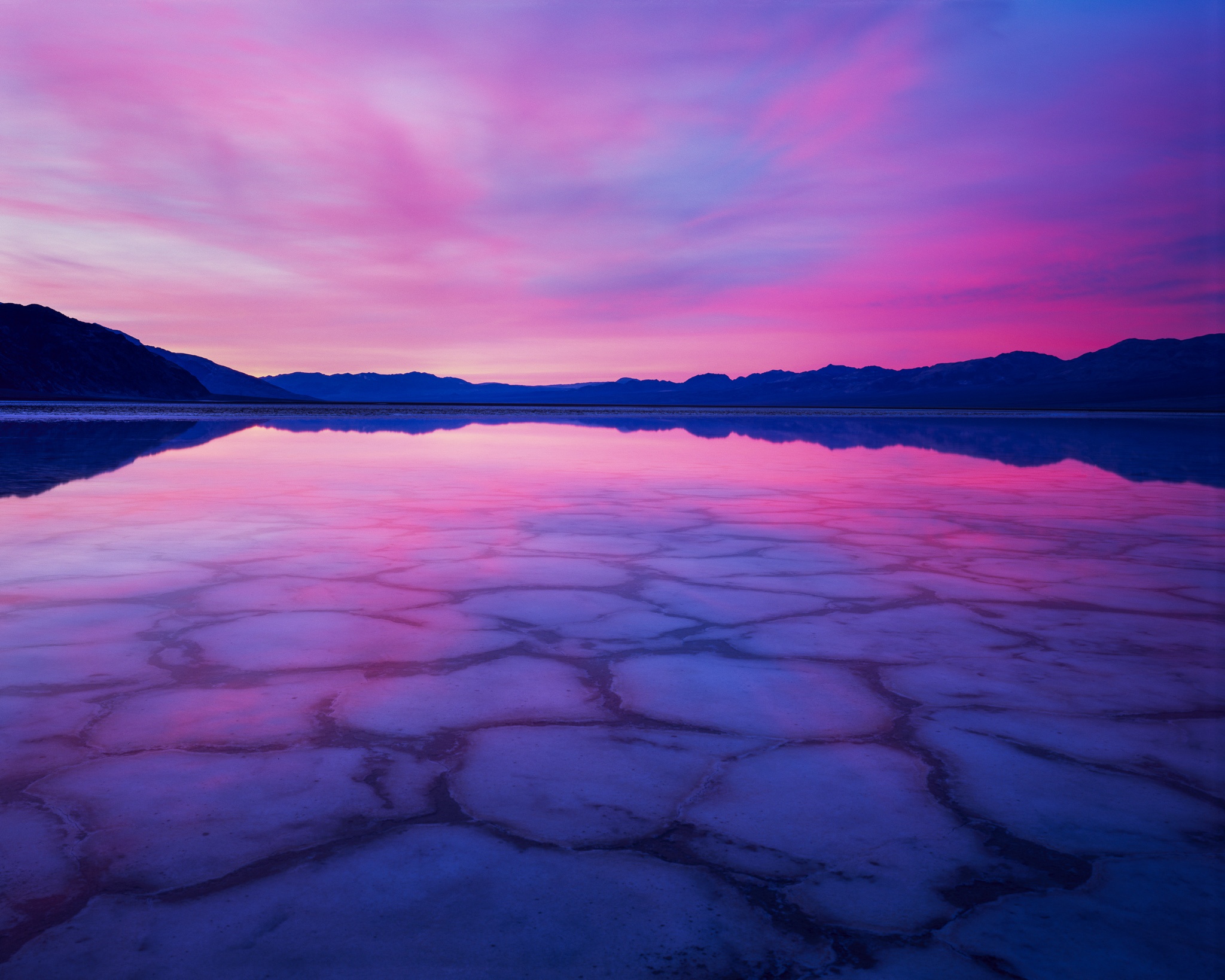
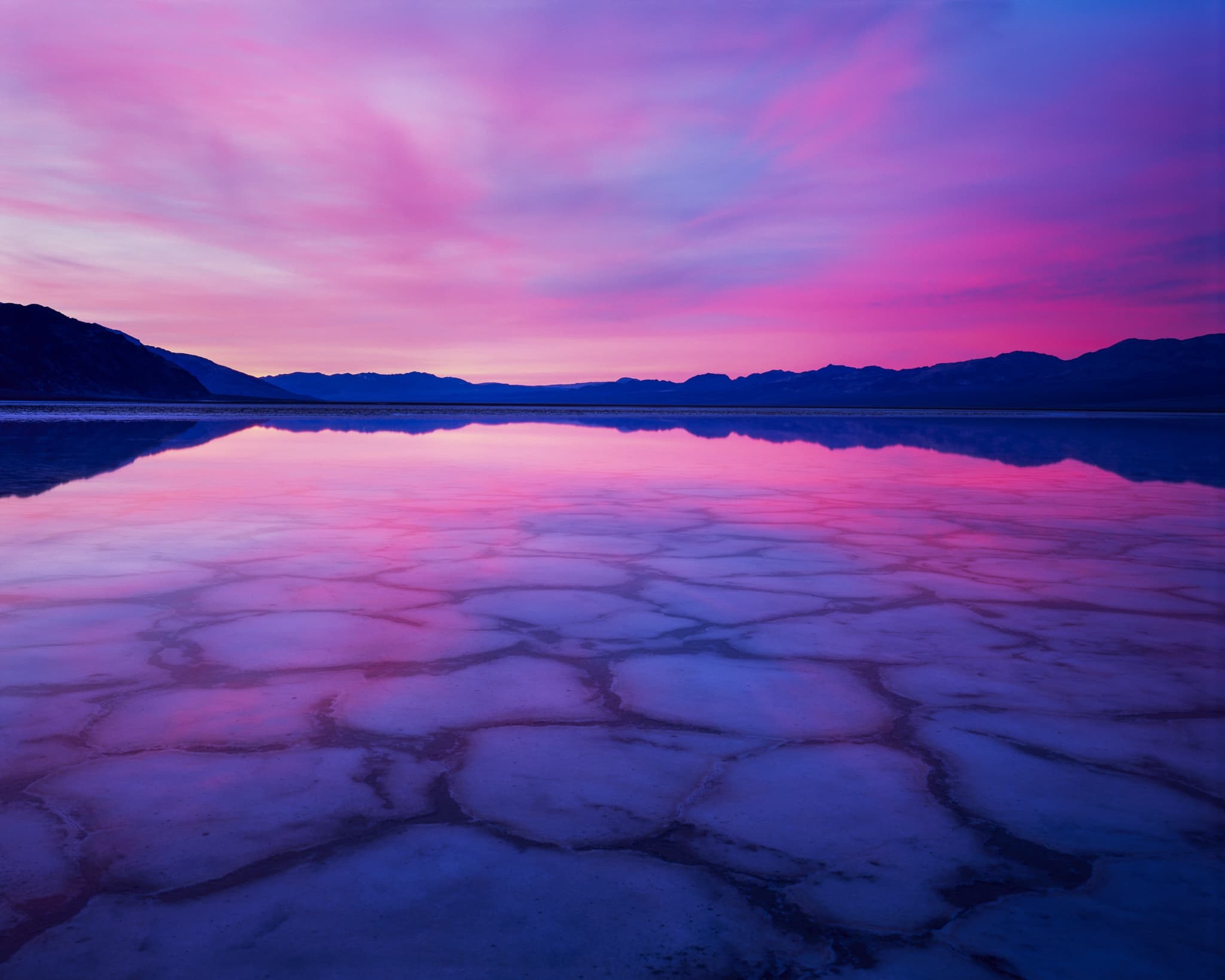
Badwater Basin Sunrise Reflection, Death Valley — shot on 4x5 Velvia 50. The tonal range in this light is where film pulls away from digital.
Film Stock Matters
Not all analog landscape photography is the same. Film stock selection is one of the most meaningful technical decisions in the process — more so than most lens choices.
Fujifilm Velvia 50 — the standard for saturated color landscape work. ISO 50, extremely fine grain, color palette that skews warm in the shadows and pulls hard on greens and reds. It rewards direct sun and overexposes badly. At the right exposure, it's unlike anything else.
Kodak E100 — more neutral, more latitude. Better for overcast or mixed light where Velvia would go too flat. Handles shadow detail more cleanly. My default when I'm not sure what the light will do.
Kodak T-MAX 400 — for black and white work. I use this for images where the tonal structure matters more than color — certain tree subjects, architectural details, interiors. The Among Giants image below was made on T-MAX in a redwood grove.
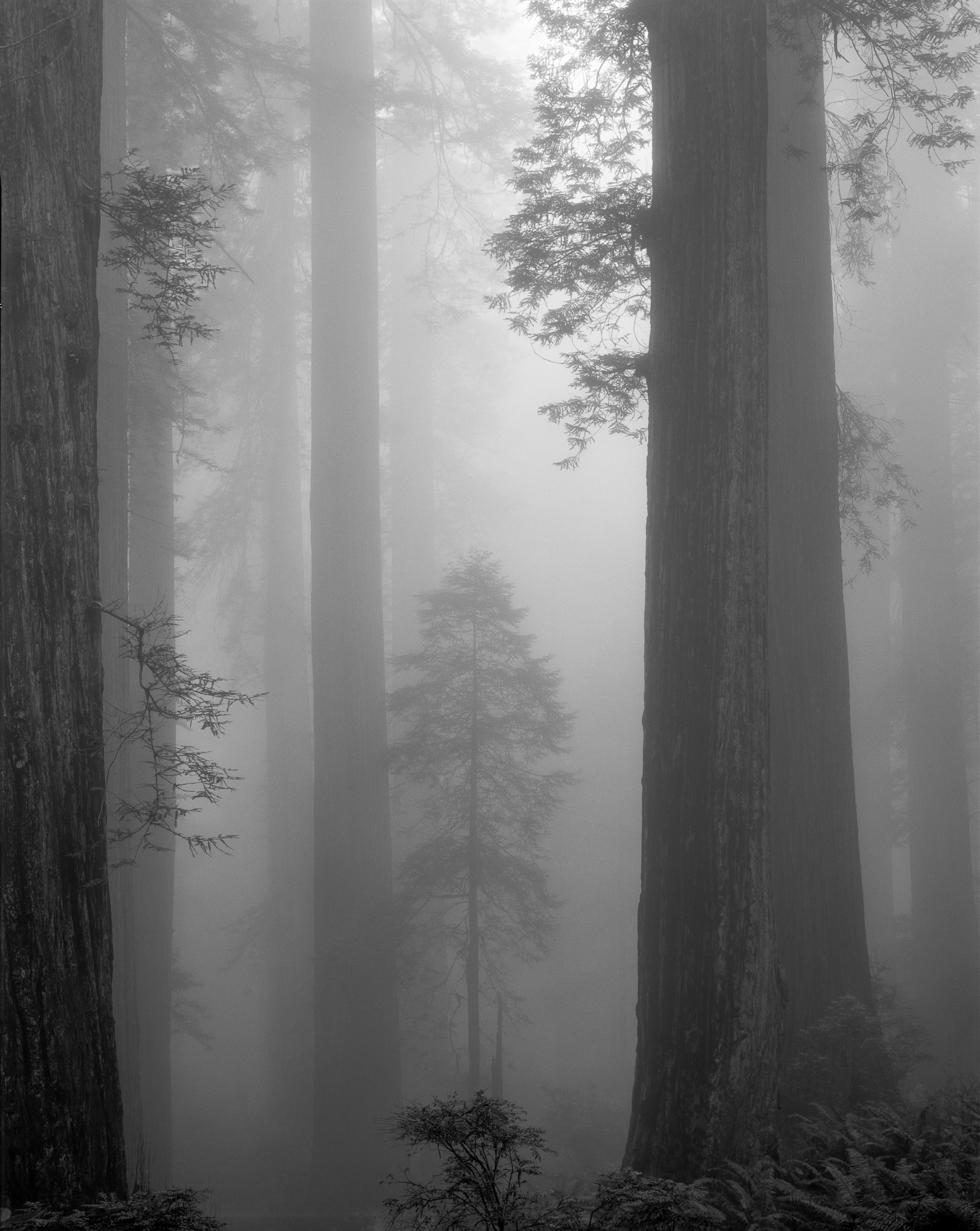
Among Giants — coastal redwoods, California. Shot on 4x5 Kodak T-MAX 400. Available as a large format fine art print.
The Field Workflow for Traditional Landscape Photography
My 4x5 kit for a day in the field weighs about 35 pounds. That number narrows your location choices in useful ways. You don't haul that to marginal spots. You pick your subject before you leave the car.
Setup sequence at each location:
- Level the tripod and attach the camera — this takes two to three minutes
- Compose under the dark cloth, adjust front and rear standards for focus and perspective control
- Meter with a spot meter — I use a Pentax Digital Spotmeter — and decide on exposure
- Insert the film holder, pull the dark slide, release the shutter, close the dark slide
- Note the exposure in a field log — film stock, shutter, aperture, filter, conditions
The whole sequence takes 8-15 minutes per sheet. That's the point. By the time the dark slide is out, you've looked at this composition for long enough to know whether it's actually working. There's no burst mode safety net.
I develop 4x5 sheet film at home using a Stearman Press SP-445 — a compact daylight tank that handles 4 sheets at once with minimal chemical volume. For color transparency film, I send out to a lab. Black and white I develop myself.
Large Format Film and Large Prints
The practical reason to shoot 4x5 in 2026 is still the same as it was in 2002: large prints. If the largest print you'll ever make is 16x20, there's no compelling argument for analog. Digital medium format or even a good full-frame camera handles that fine.
But at 32x40 and above — especially 40x50 or larger — drum-scanned large format film competes on different terms. The tonal gradations in a well-exposed sky on Velvia, printed large on Lumachrome acrylic, have a quality that's hard to describe and easy to see in person. It's why the format still gets used for billboard-scale commercial work.
If you're considering a large print of this type of landscape photography, the large format gallery shows what's available. Most prints in that collection started as 4x5 Velvia or E100.
Is Analog Landscape Photography Worth Starting in 2026?
If you're a photographer thinking about trying film — probably. Not because digital is inadequate. Because film teaches you things about light and exposure and commitment to a composition that are harder to learn any other way. A summer shooting a 4x5 in the field will change how you shoot everything else.
Start with a used Toyo or Sinar 4x5 — they're available, parts are around, and they're not fragile. Get a good spot meter. Shoot Kodak E100 until you understand how it responds, then try Velvia. Expect to burn through more film than you think while learning the mechanics. That cost is the tuition.
For more on the practical side, the post on rediscovering magic beyond megapixels with large format film goes deeper on why the format holds up, and the behind the lens post covers the artistic side.
Frequently Asked Questions
- What is analog landscape photography?
- Analog landscape photography uses film cameras — most often medium format or large format (4x5 or 8x10 inch) — rather than digital sensors. The film is exposed in the field and developed chemically, then scanned or printed optically. Large format analog photography produces files in the 400-500 megapixel range when drum-scanned, and has distinct tonal characteristics that differ from digital capture.
- What film do landscape photographers use?
- The most common choices are Fujifilm Velvia 50 (saturated color, fine grain, best in direct sun), Kodak E100 (more neutral color, better latitude in mixed light), and Kodak T-MAX 400 for black and white work. Velvia 50 has been the standard for saturated western landscape photography for decades.
- Is large format film photography still worth it in 2026?
- For photographers who make prints larger than 32x40, large format film still produces results that are difficult to match with digital capture, particularly in high-contrast outdoor lighting. For smaller prints or commercial work, modern digital medium format cameras are more practical. The format also changes how you approach composition in the field — the slow, deliberate workflow has its own value.
- What 4x5 camera should a beginner start with?
- Used Toyo or Sinar monorail cameras are readily available, mechanically sound, and have parts support. Field cameras like the Ebony or Tachihara are lighter for hiking but more expensive used. Start with whatever is in budget — the camera matters less than learning to meter correctly and read the light.
Explore Related Photography
Enjoyed this article?
Subscribe for more photography stories, techniques, and exclusive behind-the-scenes content.
Related Posts
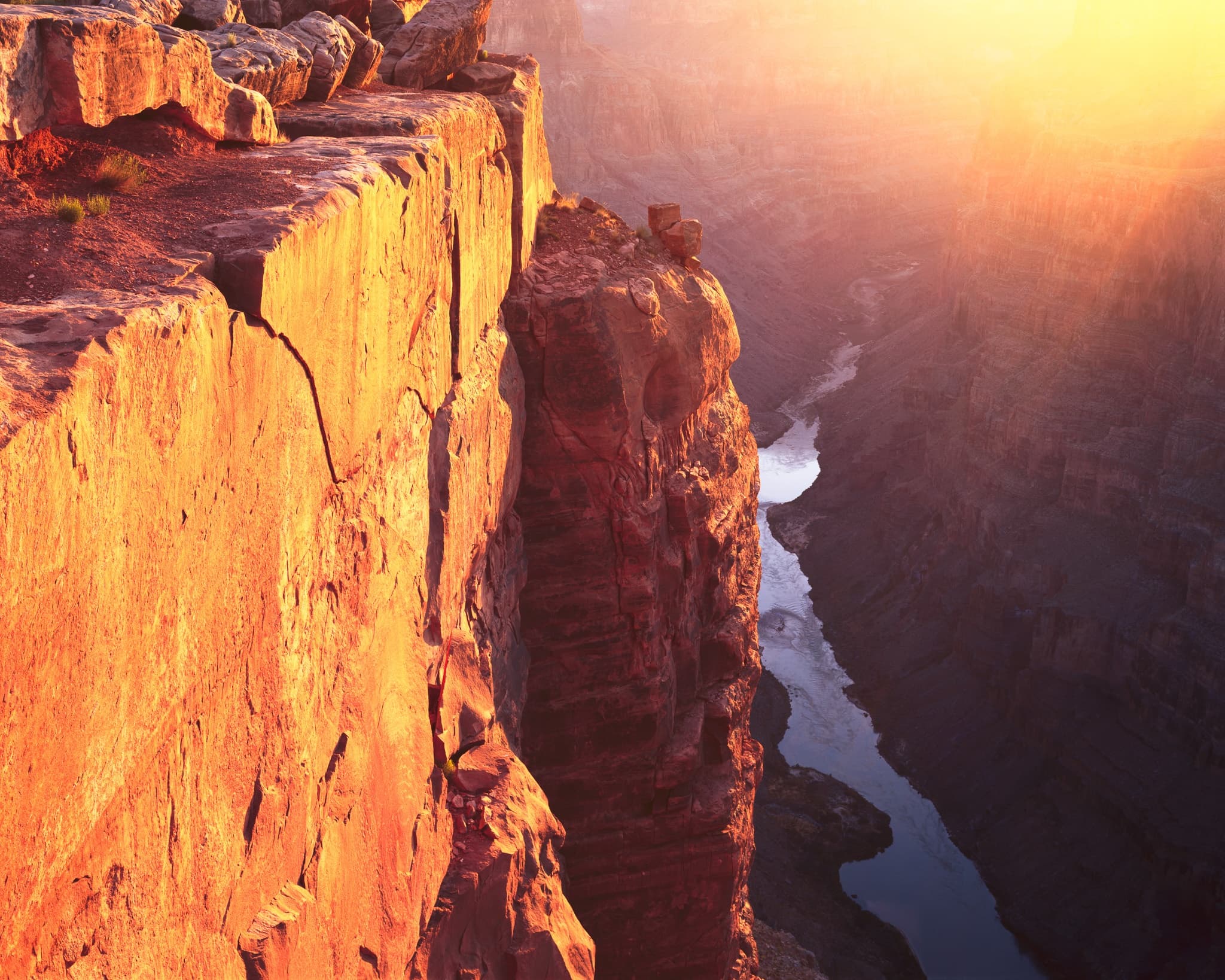
Grand Canyon Photography Guide: Best Spots, Light & Timing
The famous south rim overlooks are worth making. But the Grand Canyon images I keep coming back to came from a remote western overlook that requires 60 miles of unpaved road to reach — and from the North Rim in October, when the crowds are gone and the canyon light gets serious.
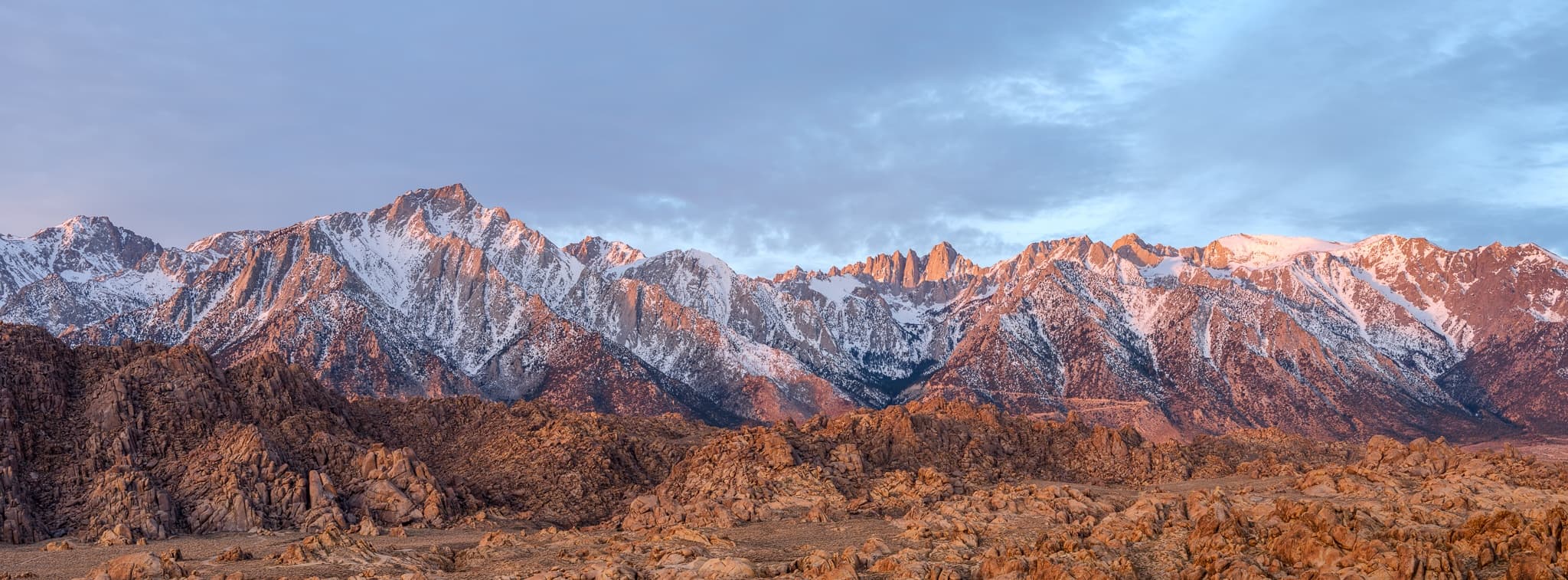
Best Places to Photograph Snow-Covered Mountains in Winter
Winter transforms mountain landscapes in ways no other season can. Where to go, when to go, and what to expect — from Yosemite's granite walls under fresh snow to Zion's red canyon in a storm.
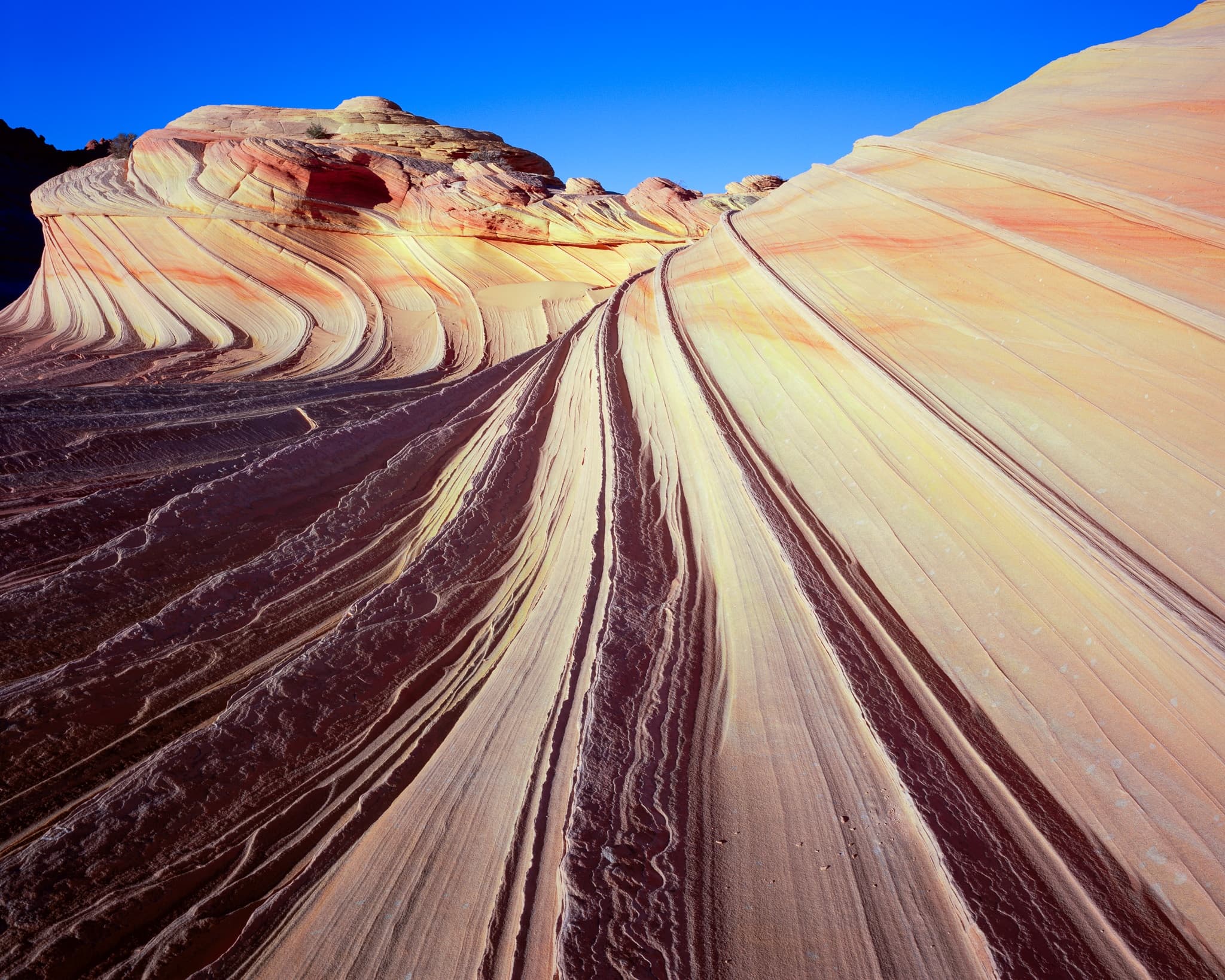
Limited Edition Landscape Prints for Sale: Southwest Fine Art Photography
A look at what makes a limited edition landscape print worth owning — how editions work, what media options hold up over decades, and which prints from the American Southwest collection are still available.
Tags
Marty Quinn
Large format film photographer based in Phoenix, Arizona. Shoots on 4x5 Arca-Swiss view cameras across the American Southwest — Utah, Arizona, Death Valley, and the Colorado mountains. 25+ years behind the lens. Published in Outdoor Photographer magazine (The Last Frame, June 2008). About Marty →