
Photographing Zion National Park: Best Spots, Light & Camera Tips
A comprehensive guide to photographing Zion National Park's dramatic landscapes. From The Narrows to Angels Landing, discover the best viewpoints, permit requirements, shuttle system tips, and seasonal recommendations for capturing Utah's most iconic park.
Fine Art Prints
Zion National Park photographs — the Narrows, canyon light, and the Virgin River. Limited edition fine art prints.
Zion Canyon Photography: Light, Scale, and What to Expect
Zion National Park stands as one of America's most visually dramatic landscapes. The towering Navajo sandstone cliffs—some reaching over 2,000 feet—create a cathedral of stone that glows with warm reds, oranges, and whites throughout the day. The Virgin River has carved this remarkable canyon over millions of years, creating a landscape that draws photographers from around the world.
As a photographer who has captured Zion on large format film for over two decades, I've learned that this park rewards patience and preparation. The interplay of light on these massive walls creates constantly changing conditions—what appears flat and uninteresting at noon can transform into a luminous display of reflected light and shadow just hours later. This guide shares the practical knowledge needed to photograph Zion effectively, from the iconic viewpoints to lesser-known locations.
Getting There and General Information
Location and Access
Zion National Park is located in southwestern Utah:
- 160 miles northeast of Las Vegas (2.5 hours)
- 310 miles south of Salt Lake City (4.5 hours)
- 85 miles from St. George, Utah (1.5 hours)
- 70 miles from Kanab, Utah (1.5 hours)
- 120 miles from Bryce Canyon (2 hours)
The main entrance is at Springdale on the south, with the east entrance accessible via the Zion-Mount Carmel Highway (a stunning drive through tunnels and switchbacks). The Kolob Canyons section in the northwest offers a less-crowded alternative.
Hours and Fees (2026)
- Park Hours: Open 24 hours, though shuttle service operates limited hours
- Entry Fee: $35 per vehicle (valid 7 days) or $80 annual pass
- Shuttle Required: Mandatory in Zion Canyon from March through November
- Tripod Use: Allowed throughout the park
Note: Reservations may be required for popular hikes. Always check the NPS website before your visit.
The Shuttle System
Understanding Zion's shuttle system is essential for photographers. From March through November, private vehicles cannot drive the Zion Canyon Scenic Drive—you must use the free shuttle from the Visitor Center.
Key Shuttle Stops for Photographers
- Stop 1 - Visitor Center: Start here, arrive early for parking
- Stop 4 - Court of the Patriarchs: Classic view of three prominent peaks
- Stop 5 - Zion Lodge: Access to Emerald Pools trails
- Stop 6 - The Grotto: Angels Landing trailhead, West Rim Trail
- Stop 7 - Weeping Rock: Hidden Canyon, Observation Point trail access
- Stop 9 - Temple of Sinawava: The Narrows trailhead
Tip: The first shuttle leaves approximately 30 minutes before sunrise. For sunrise photography, arrive at the Visitor Center parking lot at least 45 minutes before the first shuttle departs. For sunset, note that the last shuttle leaves Temple of Sinawava about an hour after sunset.
Best Times for Photography
Seasonal Considerations
Spring (March - May): Wildflowers appear, waterfalls flow strongly from snowmelt, and temperatures are comfortable (50-80°F). Spring offers excellent conditions but increasing crowds, especially during spring break and around Easter.
Summer (June - August): Hot (95-110°F in the canyon), but morning and evening light can be spectacular. Monsoon thunderstorms in July-August create dramatic clouds and occasional rainbows. The Narrows is hikeable but watch for flash flood warnings.
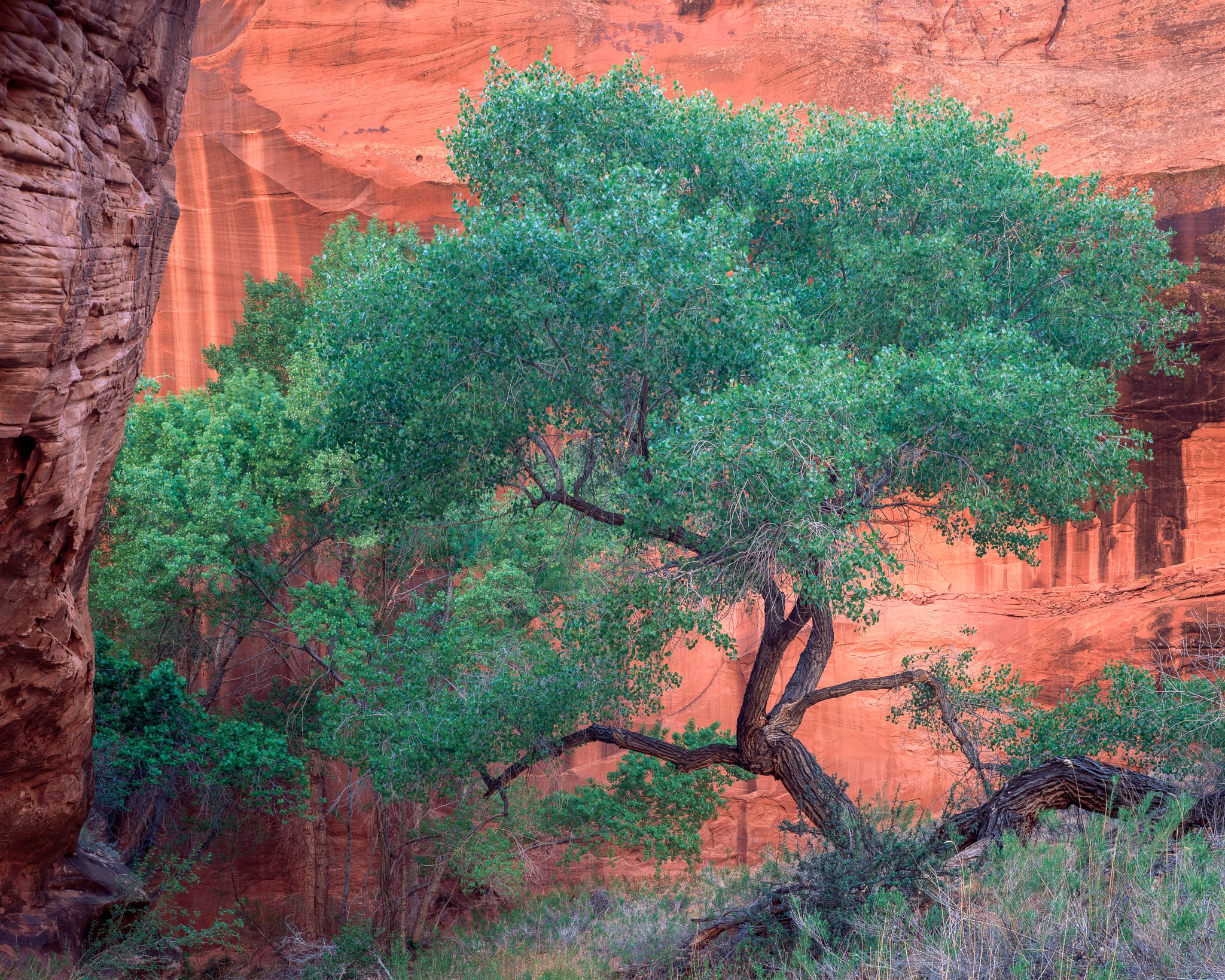
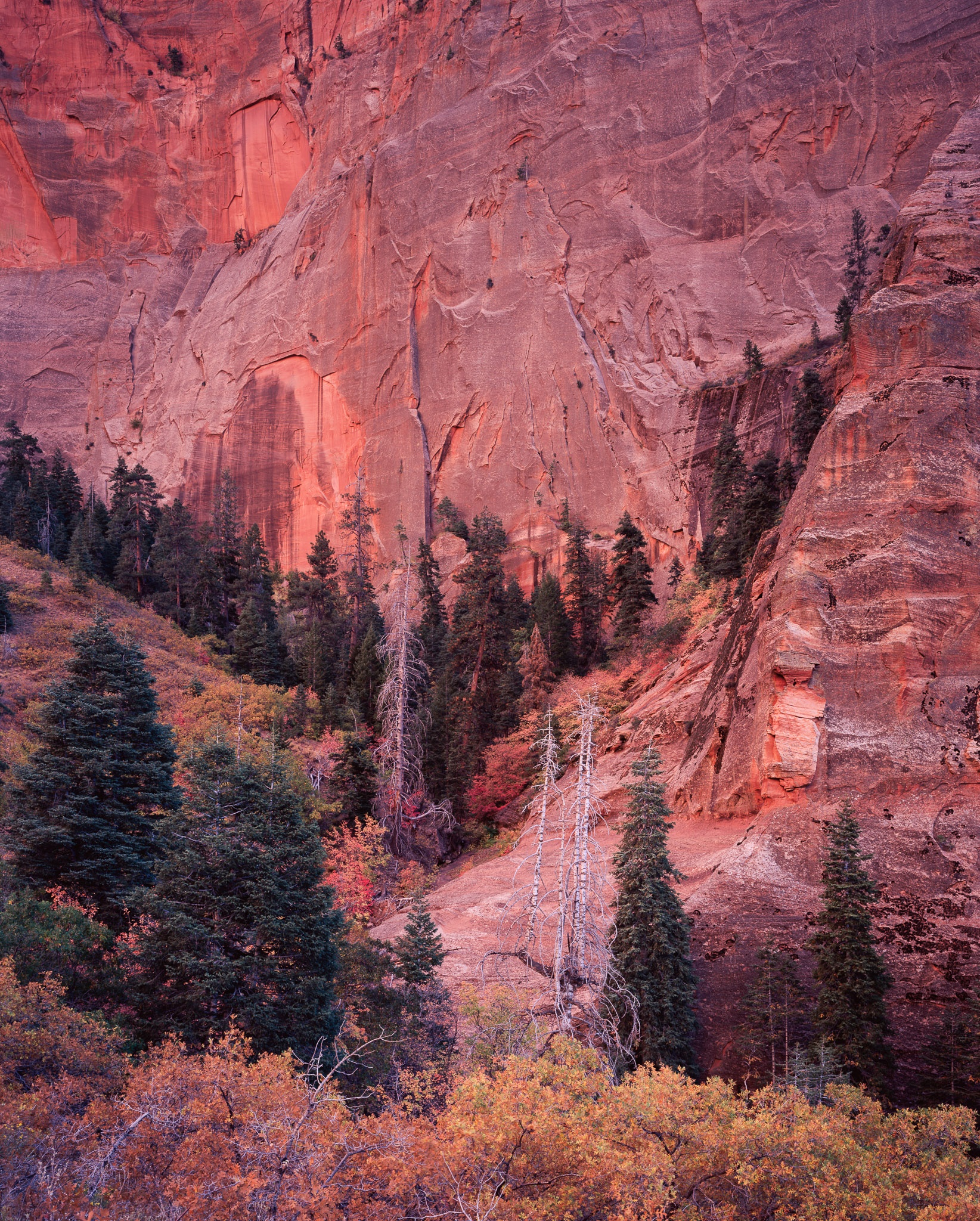
Fall (September - November): Perhaps the best overall season. Comfortable temperatures, golden cottonwoods along the Virgin River, fewer crowds after Labor Day, and excellent light quality. My Zion Canyon Glow photograph captures the beautiful fall light bouncing off the canyon walls during this season.
Winter (December - February): Cold (30-50°F), occasional snow creates stunning contrasts with red rock, fewest crowds. Some trails may be icy or closed. The shuttle doesn't run in winter, allowing private vehicle access to Zion Canyon Scenic Drive. See my Zion Snowstorm photograph showing how dramatically snow transforms the landscape.
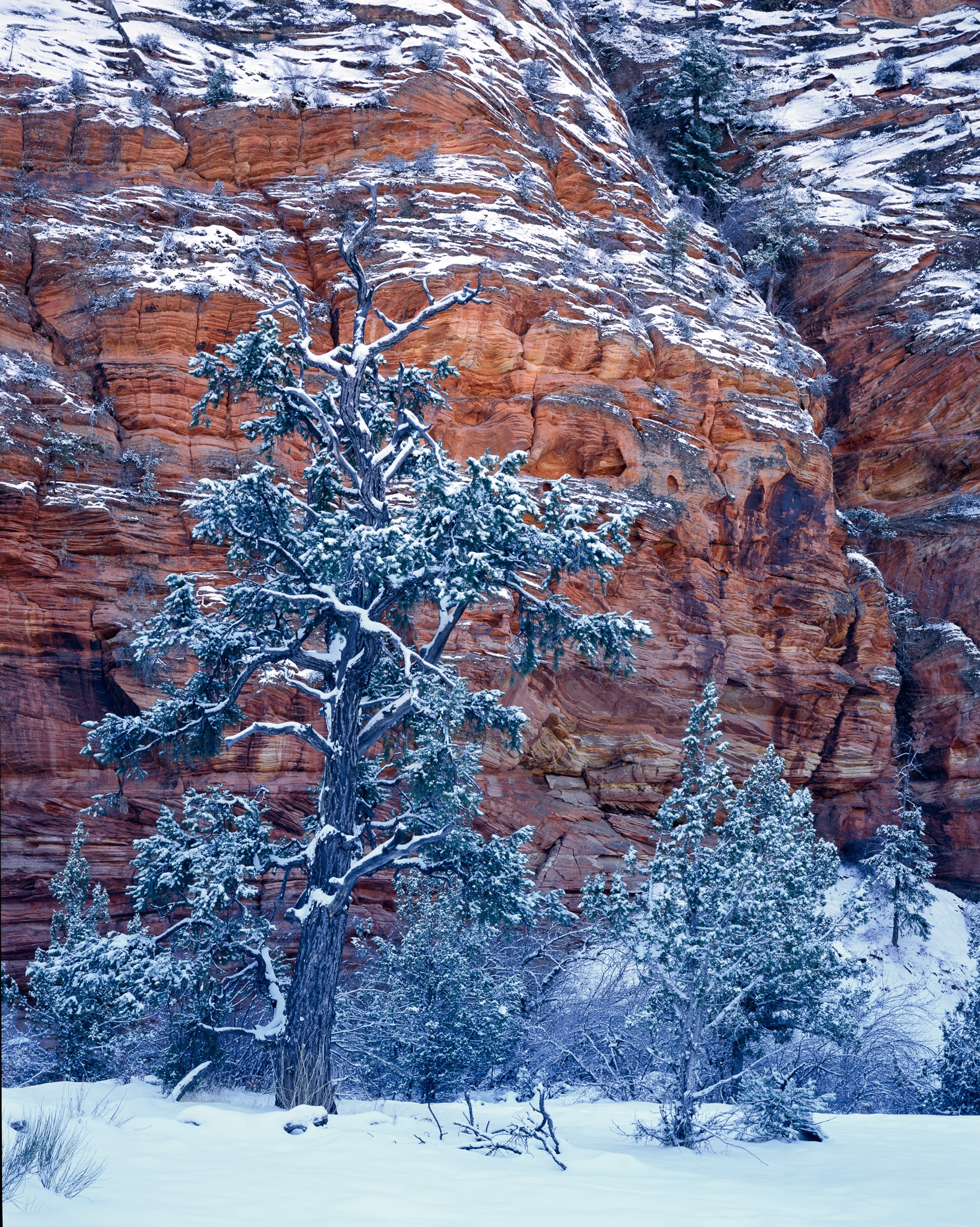
Zion Snowstorm - A rare winter snow transforms Zion National Park. Captured on a large format 4x5 camera using Fujichrome Provia 100F film. View print details and purchase options →
Daily Timing and Light
Sunrise: Direct sunrise light is limited in the deep canyon. The best morning opportunities are on the east-facing walls or at higher viewpoints like Canyon Overlook. The canyon floor remains in shadow until mid-morning.
Mid-Morning to Afternoon: The canyon walls begin to glow as reflected light bounces between the cliffs. This "canyon glow" creates the warm, luminous quality Zion is famous for. The Narrows benefits from this indirect lighting all day.
Late Afternoon: Golden light begins illuminating the west-facing cliffs. Court of the Patriarchs and the main canyon walls come alive with warm tones.
Sunset: The upper cliffs catch the last light while the canyon floor falls into shadow. Big Bend and the Watchman viewpoints offer excellent sunset opportunities.
Key Photography Locations
1. The Narrows
The Narrows is Zion's most famous photography location—and for good reason. Hiking through the Virgin River between 1,000-foot walls creates otherworldly compositions where light reflects and bounces in unpredictable ways.
- Access from Temple of Sinawava (Shuttle Stop 9)
- 1-mile paved Riverside Walk leads to river hiking
- Water shoes with good grip essential
- Check flash flood forecast before entering
- Best light typically mid-morning through early afternoon
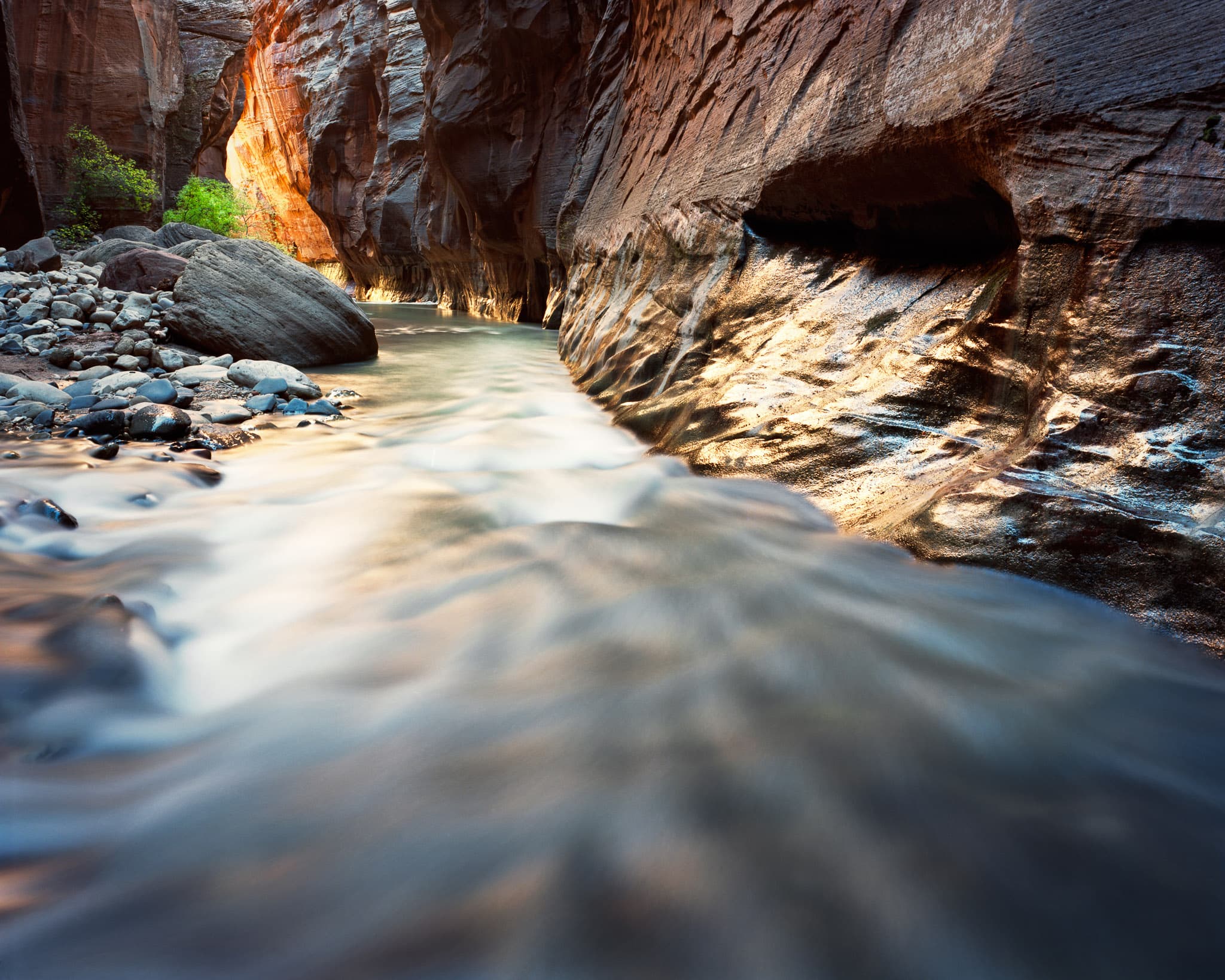
My Narrows Reflection photograph captures the magical quality of light reflecting off the canyon walls with a luminous glow at the end of the passage.
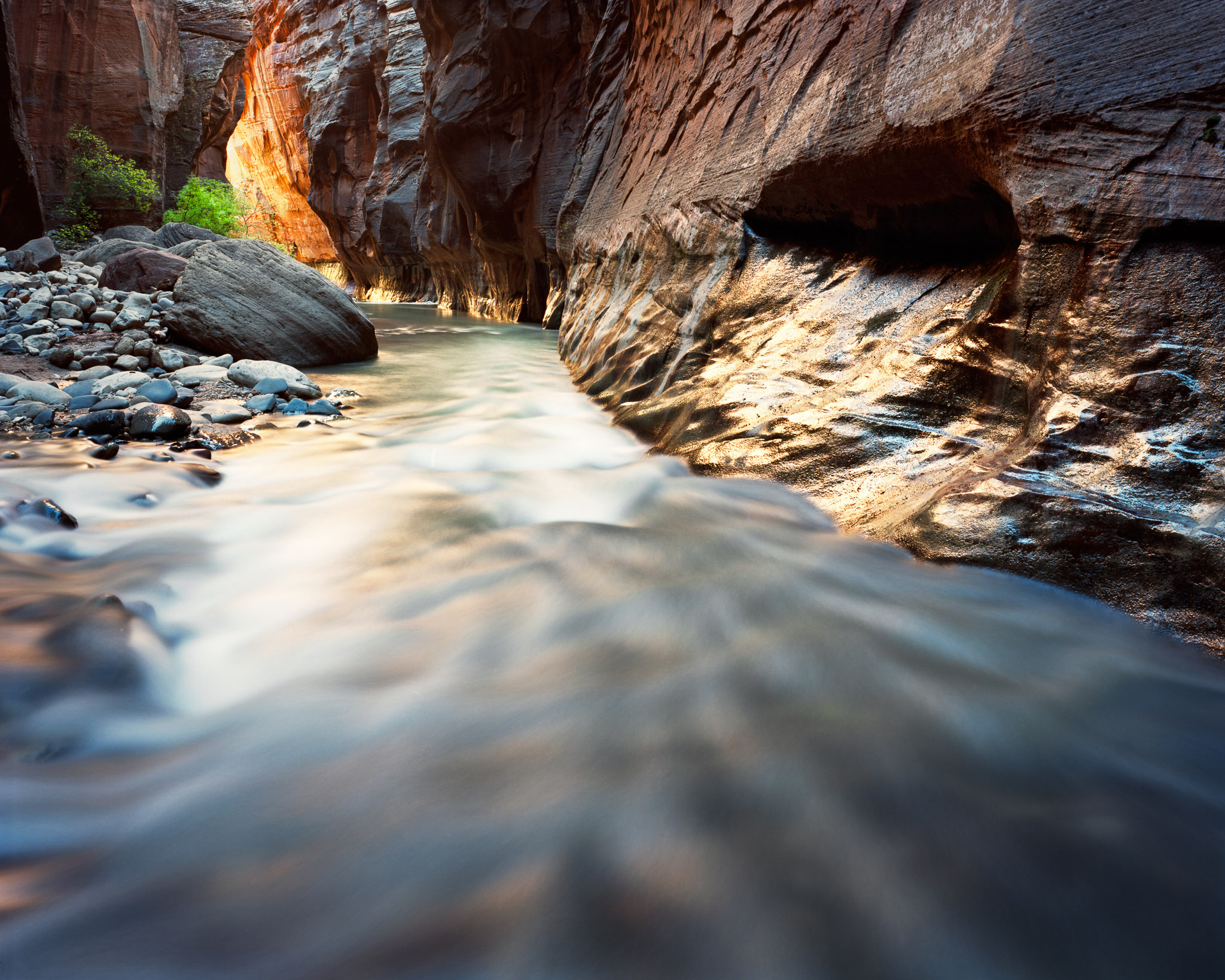
Narrows Reflection - Light reflecting off the walls with a glow at the end of the canyon. Captured on a Tachihara 4x5 camera using Kodak Ektar 100 film. View print details and purchase options →
2. The Subway (Left Fork)
The Subway is a unique geological formation where water has carved a tube-shaped passage through the rock. This location requires a permit and involves either a strenuous bottom-up hike or a technical top-down canyoneering route. For a detailed account of the bottom-up route, read my Subway trail guide from the Left Fork Trailhead.
- Permit Required: Must be obtained in advance through recreation.gov
- Bottom-up route: 9 miles round trip, challenging navigation
- Top-down route: Requires rappelling skills and equipment
- Best photographed in fall when water levels are lower
- Allow full day for photography
My Golden Glow photograph captures the magical light inside the Subway, while The Crack shows the famous narrow passage where the West Fork of North Creek flows through on the way to the Subway.
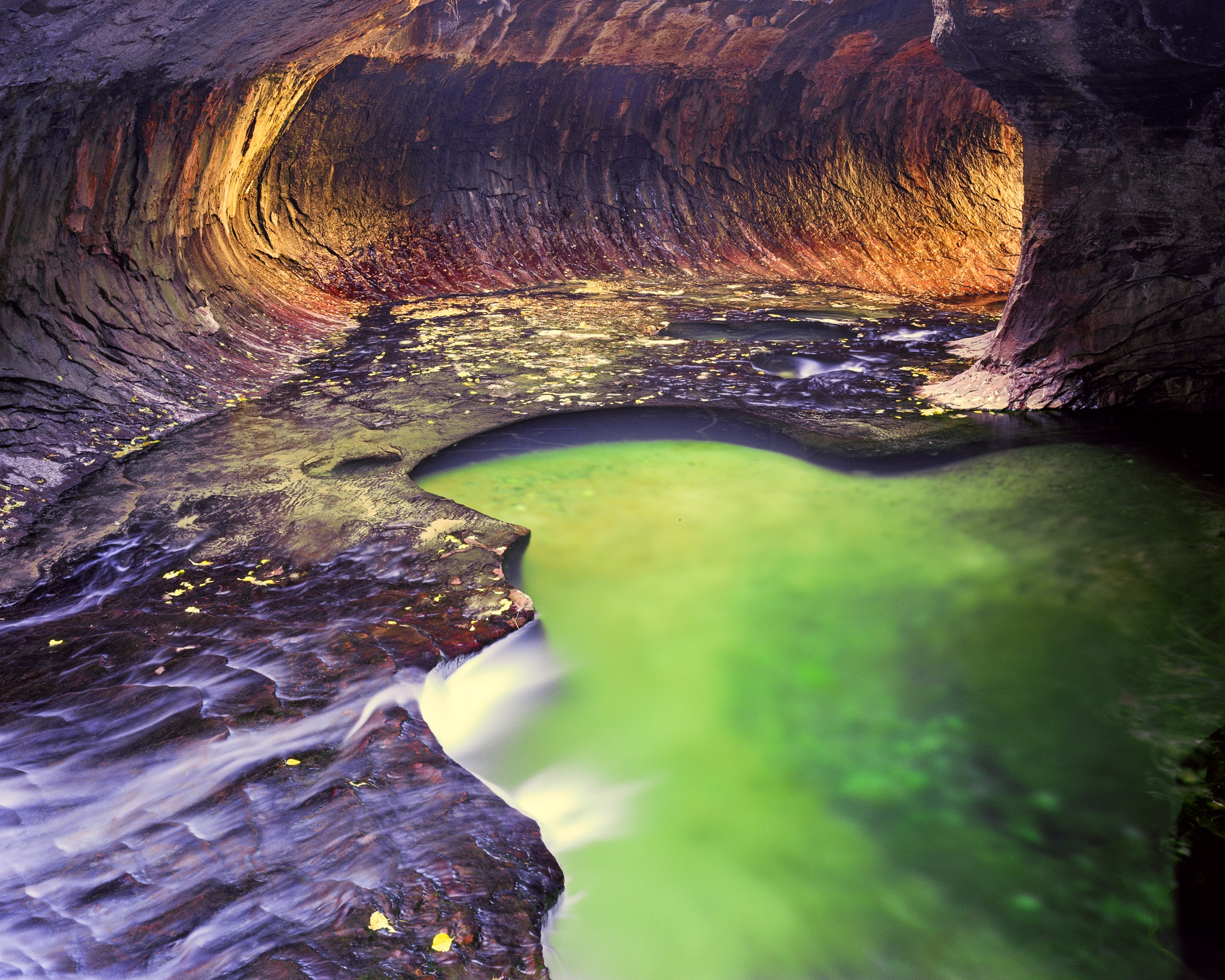
Golden Glow - Golden light glows in the Subway located in Zion National Park. Shot with a large format 4x5 camera using Kodak Ektar film. View print details and purchase options →
3. Canyon Overlook Trail
This 1-mile round trip trail offers one of the best accessible viewpoints in the park, overlooking Pine Creek Canyon and the main Zion Canyon beyond. Located just east of the long tunnel on the Zion-Mount Carmel Highway.
- No shuttle required—accessible by private vehicle
- Excellent sunrise location (east-facing)
- Moderate difficulty with some exposure
- Limited parking—arrive early
4. Court of the Patriarchs
Three prominent peaks—Abraham, Isaac, and Jacob—create a classic Zion composition. A short walk from Shuttle Stop 4 provides excellent views, particularly in afternoon light when the peaks catch golden sun.
5. Angels Landing
While famous as a challenging hike, Angels Landing also offers extraordinary photography opportunities. The final section involves chains and significant exposure—not suitable for everyone, especially with heavy camera gear.
- Permit Required: Day-of or advance lottery through recreation.gov
- 5.4 miles round trip with 1,500 feet elevation gain
- Scout's Lookout (before chains) offers excellent views without the exposure
- Best for sunrise or sunset light
6. The Watchman and Pa'rus Trail
The Watchman is Zion's iconic peak visible from the Visitor Center area. The Pa'rus Trail offers easy, accessible walking along the Virgin River with excellent views of the Watchman and other formations.
- No shuttle required—walk from Visitor Center
- Excellent sunset location for the Watchman
- Fall cottonwoods provide beautiful foreground
- Wheelchair and stroller accessible
7. Kolob Canyons
This northwestern section of Zion offers dramatic finger canyons and far fewer crowds. The 5-mile scenic drive provides multiple viewpoints, and several trails access deeper into this less-visited area.
- Separate entrance off I-15 (Exit 40)
- No shuttle—drive your own vehicle
- Excellent fall colors in side canyons
- Kolob Arch—one of the world's largest freestanding arches
Permits and Reservations
Several of Zion's most popular locations now require permits:
- Angels Landing: Requires permit obtained through lottery system (recreation.gov). Seasonal lottery opens months in advance; day-before lottery available for last-minute trips.
- The Subway: Wilderness permit required. Limited to 80 people per day. Apply through recreation.gov lottery system.
- The Narrows (overnight): Wilderness permit required for through-hike from Chamberlain's Ranch. Day hikes from the bottom don't require permits.
- Commercial Photography: Permit required for professional/commercial shoots involving models, props, or crews.
Technical Photography Considerations
Recommended Equipment
Camera and Lenses:
- Wide angle (14-24mm): Essential for canyon interiors and The Narrows
- Standard zoom (24-70mm): Versatile for most viewpoints
- Telephoto (70-200mm): Compressing canyon layers, isolating formations
- Polarizing filter: Reduces reflections on water, enhances canyon walls
- Sturdy tripod: Essential for The Narrows (wet conditions) and low light
For Large Format Photographers: I typically work with my Chamonix 4x5 using lenses from 75mm to 210mm. The narrow canyon conditions make wide angles particularly valuable. Protecting gear from water in The Narrows requires careful planning—I use dry bags and waterproof cases.
Camera Settings
For Canyon Interiors:
- Aperture f/16 for digital cameras; large format shooters commonly use f/32-f/45 to keep everything sharp within the frame
- Longer exposures often needed—tripod essential
- Watch white balance—canyon walls create strong color casts
For The Narrows:
- Polarizer reduces reflections on wet rocks and water surface
- Protect gear from splashes—rain covers or plastic bags
- River shoes with good grip are essential—available for rent from multiple outfitters in Springdale
- A sturdy tripod is essential for the low-light conditions
Safety Considerations
Flash Floods
Flash floods are the primary danger in Zion's slot canyons. Never enter The Narrows or any slot canyon when:
- Flash flood warnings are posted
- Thunderstorms are forecast anywhere in the watershed
- Water is murky or rising
- You hear roaring upstream
Heat and Hydration
Summer temperatures in Zion Canyon routinely exceed 100°F. Carry at least 1 liter of water per hour of hiking, start early, and take breaks in shade. The canyon floor can feel 10-15°F hotter than the rim.
Trail Exposure
Several Zion trails involve significant exposure (drop-offs). Angels Landing's chain section is particularly exposed. If you're uncomfortable with heights or carrying heavy camera gear, Scout's Lookout provides excellent views without the final exposed section.
Practical Tips for Photographers
Beating the Crowds
- Visit during shoulder seasons (March-April, October-November)
- Arrive at the Visitor Center before 7 AM in peak season
- Hike The Narrows on weekdays when possible
- Consider winter visits when shuttles don't run
- Explore Kolob Canyons for solitude
Accommodation and Base Camp
Springdale offers numerous hotels, restaurants, and shops at the park's south entrance. Staying in town means easy shuttle access without driving into the park. Zion Lodge inside the park offers the only in-park accommodation—book months in advance.
Fine Art Prints
Zion National Park Photography Prints
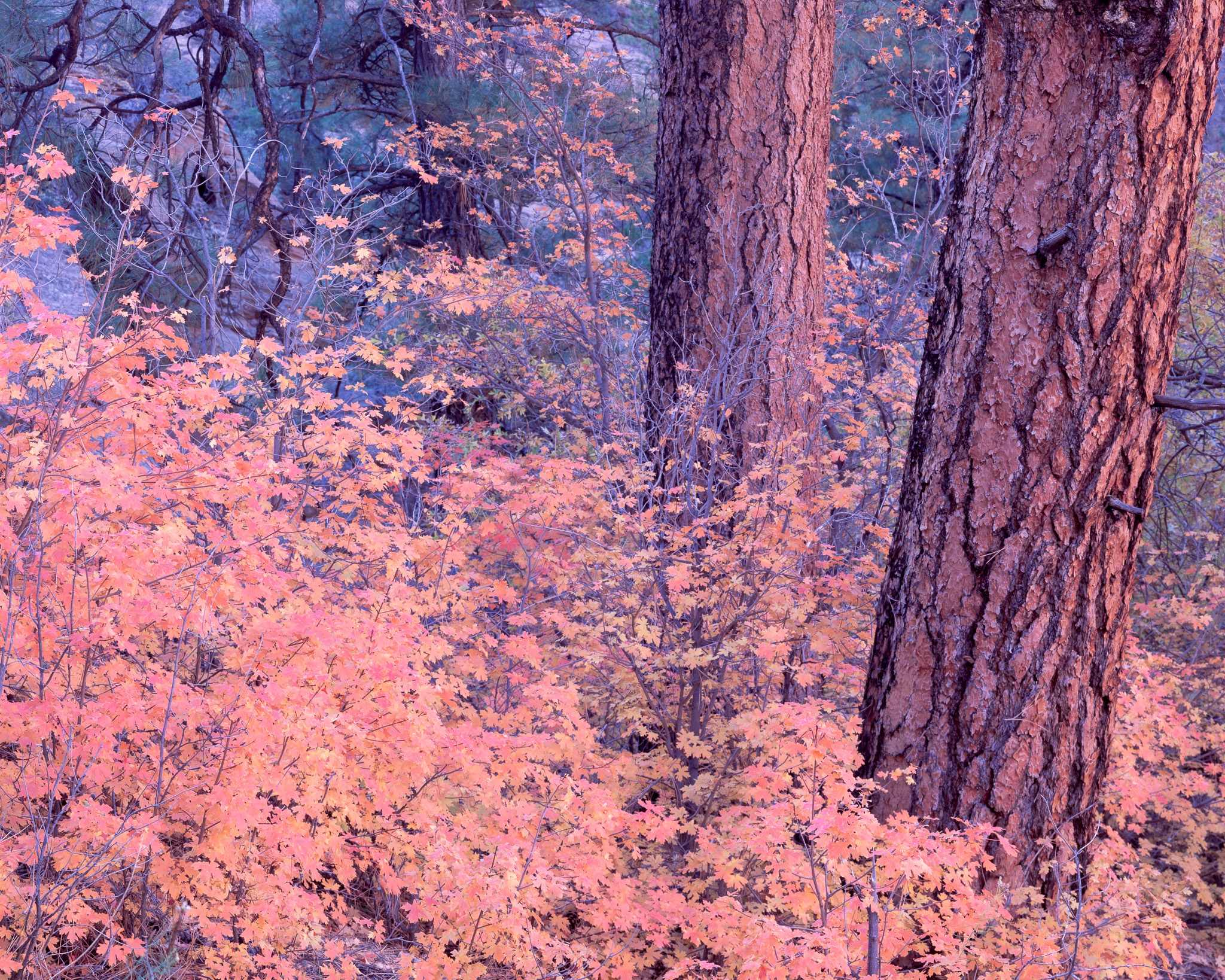
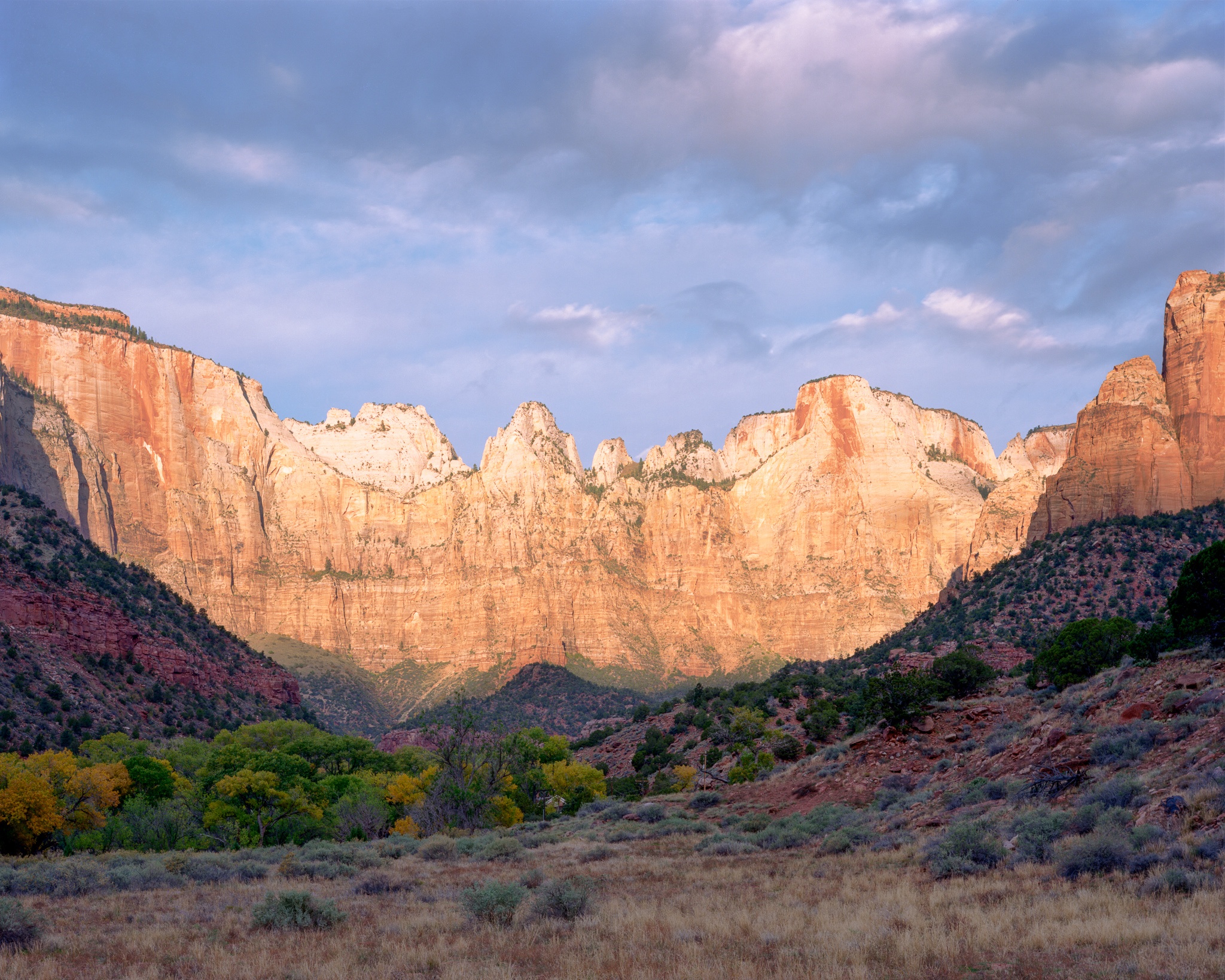
Large format film photographs from Zion — the canyon walls, the Narrows, the fall color in the side canyons. Limited edition fine art prints, archival pigment on museum-grade paper, with certificate of authenticity.
Final Thoughts
Zion National Park rewards photographers who understand its unique light. The deep canyon creates conditions where reflected light becomes as important as direct sunlight—those glowing canyon walls that appear in so many photographs happen when light bounces between the massive sandstone faces.
Whether you're wading through The Narrows with a camera held above your head, watching dawn break over Canyon Overlook, or exploring the quiet red-rock fingers of Kolob Canyons, Zion offers endless photographic opportunities. The key is preparation: understand the shuttle system, secure necessary permits, check weather conditions, and arrive with patience.
I hope this guide helps you plan your own Zion photography adventure. If you want to see pictures of Zion National Park before you go—images that show how the light actually behaves in the canyon at different seasons—browse my Zion photography gallery or the broader Utah landscape photography collection.
Happy shooting, and may you find your own unique perspective in this magnificent landscape.
Fine Art Prints
Not making this trip? Own the view.
These photographs required years of fieldwork, pre-dawn drives, and considerable luck with light. Limited editions on ChromaLuxe metal or Lumachrome acrylic — each with a certificate of authenticity and edition number.
Frequently Asked Questions
- What are the best photography spots in Zion National Park?
- Canyon Overlook Trail at sunrise for canyon views without crowds, The Narrows for in-water canyon photography, Angels Landing for elevated perspectives (permit required), and Kolob Canyons for solitude and red rock fins. The main canyon shuttle road also has strong pull-off viewpoints, particularly effective in the early morning before buses run.
- When is the best time to photograph Zion National Park?
- March–April and October–November. Moderate temperatures, manageable crowds, and the canyon's reflected light is most dramatic when the sun angle is lower. Fall brings cottonwood color in the side canyons. Summer is hot and extremely crowded; winter is quiet but some trails ice over and shuttle service is reduced.
- How do I photograph The Narrows in Zion?
- Enter from the Temple of Sinawava shuttle stop and wade upriver. Waterproof gear and rental water shoes make a significant difference. The canyon walls reflect warm sandstone light that intensifies mid-morning. No permit is required for the bottom-up route. Check water levels before entering — flash floods can close The Narrows without much warning.
- What causes the glowing canyon walls in Zion photographs?
- Reflected light. The canyon walls are close together, so sunlight hitting one sandstone wall bounces across to illuminate the opposite wall in warm, diffused orange tones. This effect is strongest in the mid-canyon sections mid-morning. It's different from direct light — softer and more saturated — and it's what makes Zion photography so distinctive.
- Do I need a permit for Angels Landing in Zion?
- Yes. Angels Landing requires a permit through a lottery system on recreation.gov. Day-before and day-of permits are available in smaller numbers. The final half-mile involves chains fixed into exposed rock and is a genuine scramble, not a standard trail — be honest with yourself about your comfort with exposure before applying.
Explore Related Photography
Enjoyed this article?
Subscribe for more photography stories, techniques, and exclusive behind-the-scenes content.
Related Posts
Grand Canyon Photography Guide: Best Spots, Light & Timing
The famous south rim overlooks are worth making. But the Grand Canyon images I keep coming back to came from a remote western overlook that requires 60 miles of unpaved road to reach — and from the North Rim in October, when the crowds are gone and the canyon light gets serious.
Best Places to Photograph Snow-Covered Mountains in Winter
Winter transforms mountain landscapes in ways no other season can. Where to go, when to go, and what to expect — from Yosemite's granite walls under fresh snow to Zion's red canyon in a storm.
Analog Landscape Photography: Why Film Still Makes Sense in 2026
Most photographers who've tried 4x5 large format film don't go back to digital for their serious landscape work. Here's the honest case for shooting analog in an era when you have no practical reason to.
Tags
Marty Quinn
Large format film photographer based in Phoenix, Arizona. Shoots on 4x5 Arca-Swiss view cameras across the American Southwest — Utah, Arizona, Death Valley, and the Colorado mountains. 25+ years behind the lens. Published in Outdoor Photographer magazine (The Last Frame, June 2008). About Marty →